
Nikro Air Duct Cleaning in Richardson: A Homeowner’s Guide
Plenty of duct cleaning companies put “Nikro” on their website and then show up with one technician, a shop vacuum and no containment plan. The brand name on the van tells you almost nothing. What matters is whether the equipment is set up to create negative pressure, so the debris it loosens gets captured instead of pushed into your living room. This guide explains what Nikro systems actually do mechanically, so you can read any quote in Richardson with a sharper eye.
What does Nikro equipment actually do during a duct cleaning?
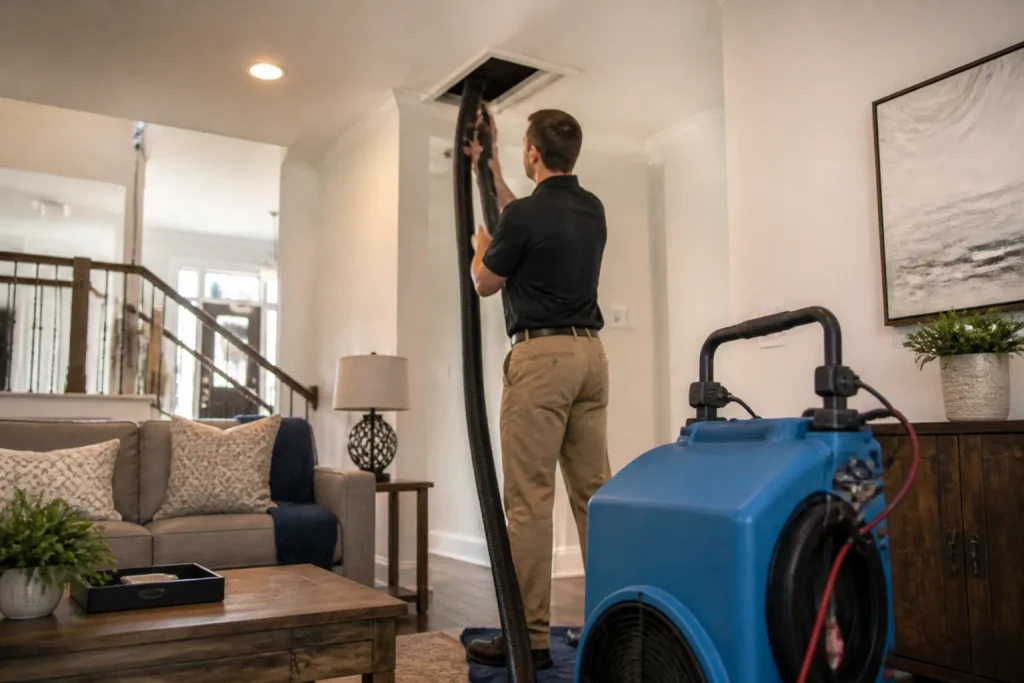
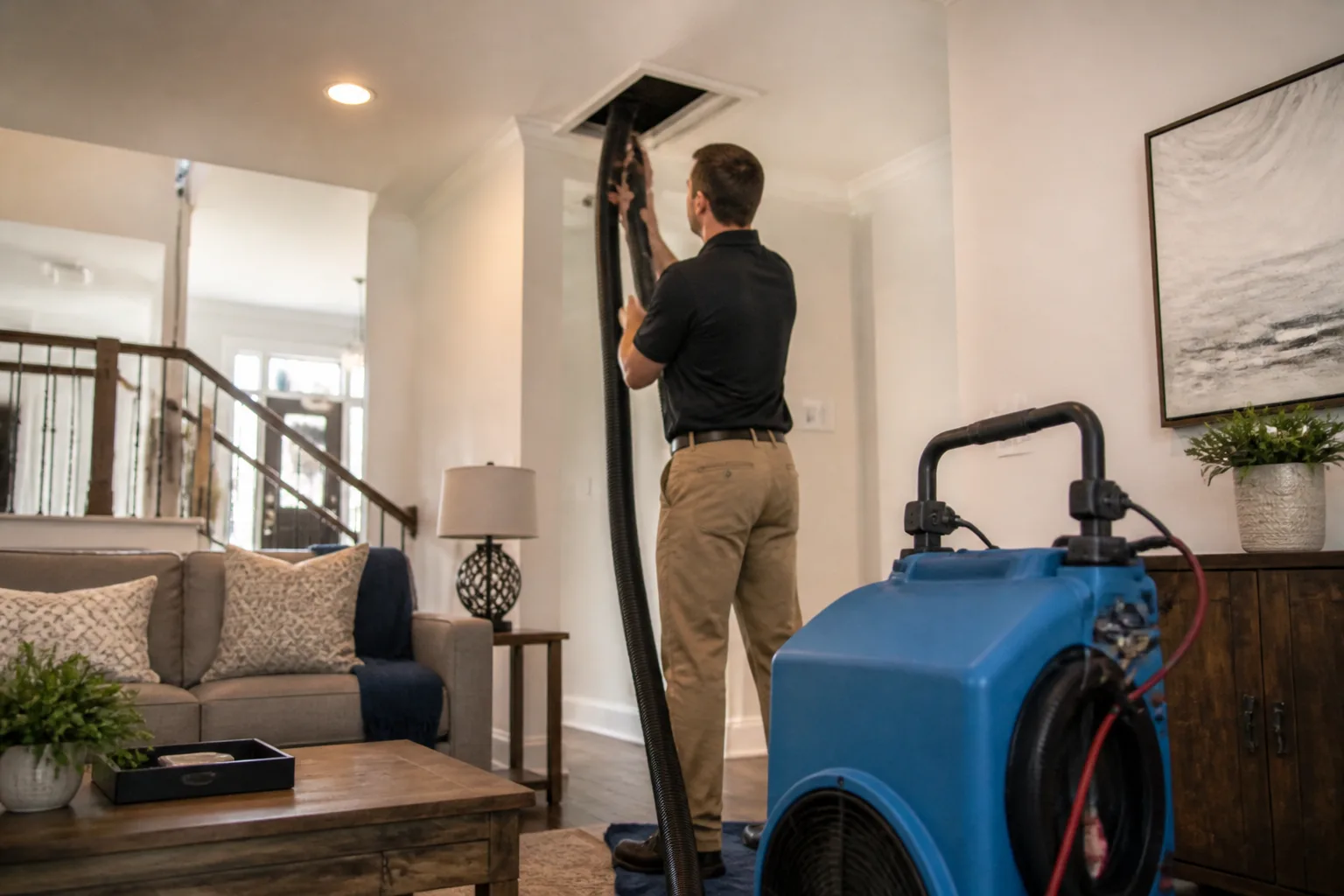
A Nikro HEPA vacuum unit is a negative air machine. It doesn’t just suck dust; it pulls the whole duct system into a state of lower pressure than the rooms around it. That pressure difference is the entire point. When a rotary brush or air whip loosens caked dust from the duct walls, the loosened material has only one place to go: toward the vacuum intake, because the surrounding air is pushing it there.
A shop vacuum with an open exhaust does the opposite. It creates suction at the nozzle, but it also blows filtered (or barely filtered) air back into the room. Dislodged debris that isn’t captured at the nozzle simply settles into the airstream, the carpet, the furniture. You’ve moved the problem, not solved it.
Here’s what a properly set-up Nikro-based clean looks like on a typical Richardson home:
- One or more HEPA-rated vacuum units connected to the main trunk or a register, running for the duration of the job.
- Every other register sealed with foam or plastic so the system is closed. Air comes in only where the technician is working.
- Rotary brush or air whip agitation inside each branch line while the vacuum holds negative pressure.
- HEPA filtration on the exhaust, so what comes out of the machine is cleaner than what went in.
If a technician can’t describe which of those steps they’ll take, the equipment name on the invoice is decoration. That’s true anywhere in Richardson, and it’s the first thing worth asking about.
Why Nikro is engineered for mold and allergen work, not just dust
Nikro systems are built around a different design brief than a general-purpose vacuum. They’re designed to be used in environments where the material being captured is genuinely hazardous – mold spores, settled allergen, fine construction dust – and the exhaust air has to be safe to breathe. That’s why the HEPA stage is a core component, not an add-on filter.
For a household in Richardson dealing with allergy flare-ups, a musty smell when the system first kicks on, or visible dust settling on surfaces days after cleaning, that distinction matters. A basic clean removes the loose layer. A HEPA-contained clean removes the material that keeps re-settling.
This is also where Abatement Technologies equipment fits in. Those are the filtration units used on professional mold and contaminant remediation jobs, and bringing the same category of air scrubber into a residential service protects the indoor air while work is in progress. The technician isn’t just cleaning the ducts – they’re managing the air in the room they’re standing in. That’s a serious indoor-air-quality standard, and it’s the difference between a service and a disruption.
We’ve seen plenty of ducts in Richardson that looked fine from the register and told a different story once the camera went in. The equipment lineup is what determines whether that story gets resolved or just stirred up.
Nikro vacuum units vs. Nikro air washing systems: which applies to your home?
These are two different tools with two different jobs, and confusing them is one of the more common quote errors we come across.
A Nikro vacuum unit provides the capture. It’s the negative pressure engine of the job – the machine that holds the duct system under suction and filters the exhaust through HEPA media. Every thorough clean needs one, regardless of what else is used.
A Nikro air washing system is a source of high-volume, high-velocity compressed air delivered through a hose or nozzle assembly. Its job is to break loose material the brush can’t reach – the corners of rectangular trunk lines, the far end of a long branch run, the plenum above a furnace. Used with negative pressure in place, it’s a legitimate cleaning method. Used without it, it’s a debris distribution system.
For most Richardson homes, the choice comes down to duct layout:
- Standard flex-duct branch systems usually respond well to rotary brush agitation plus vacuum capture. Brush contact on the duct wall does the work.
- Rigid rectangular trunk lines with long runs often need air washing to reach surfaces a brush can’t sweep, paired with a vacuum unit holding pressure.
- Older homes with original sheet metal ductwork frequently have both – brush for the branches, air wash for the trunk – and benefit from a camera inspection to confirm what’s actually inside.
A technician who can explain which method fits your layout, and why, is a technician who understands the equipment. That’s a reasonable test before you book anything.
What to ask a company that claims to use Nikro equipment
The word “Nikro” on a website is a starting point, not a qualification. Here’s the short list of questions that will separate a real setup from a name-drop, and you can ask them over the phone before anyone comes out.
- How many vacuum units will you run, and where will they connect? A real answer names the trunk line or main register and mentions sealing the other openings.
- Will you seal the registers you’re not working on? If the answer is no, negative pressure can’t hold and the containment loop is broken.
- Is the exhaust HEPA-filtered? Nikro’s HEPA stage is the point. Confirm it’s installed, not optional.
- Will you agitate the duct walls, and with what? Brush, air whip, or air wash – each has a place. “We just vacuum the registers” is not a duct cleaning.
- Do you use an air scrubber while working? For households with allergies or a musty smell, an Abatement Technologies filtration unit running during the service protects the air in the room.
- Will I see before-and-after photos of my own ducts? A camera or photo record of the actual system is the only honest proof of what was removed.
- Can you repair a duct if you find a disconnected run? Cleaning a system that leaks means the clean doesn’t hold. Not every company can fix what it finds.
If you’d rather skip the interrogation and talk to someone who can answer all seven, that’s a fair reason to duct cleaning Richardson homeowners call us. We answer equipment questions before the job, not after.
What does a Nikro-based cleaning cost compared with a basic clean?
A HEPA-contained, negative-pressure duct cleaning costs more than a basic pass-through, and the difference is real work. More equipment, more time, more sealing, more handling. Instead of quoting you a teaser number, here’s what drives the price:
| Line item | What it involves |
|---|---|
| Negative pressure setup | Connecting and running HEPA vacuum units, sealing every register in the system |
| Duct agitation | Rotary brush, air whip, or air wash through each branch and trunk, matched to duct type |
| Containment air filtration | Running an air scrubber in the workspace during the job, particularly for allergy households |
| System inspection | Camera or photo evidence, plus checking connections, joints and returns |
| Repair allowance | If a run is disconnected or crushed, sealing it is what prevents re-contamination |
For a household where the motive is “I want it done once and done properly,” that delta is justified. If the ducts are clean and the concern is only surface dust on the registers, a lighter service may be plenty. The honest answer is that a good company will tell you which one you actually need – and put the number in a written estimate before any work starts. One flat price per system, agreed up front, no surprises once the van is parked.
That’s the other half of the Nikro equation. Equipment that captures the debris means the job documents itself: the photos show what came out of your ducts, not a vague assurance that “everything’s been cleaned.”
When to call a pro
Some jobs are fine to check yourself. A register cover that’s dusty, a filter that needs swapping – no call needed. But if you’re seeing any of the following, it’s worth a professional look rather than a deeper DIY attempt:
- Musty or stale odor that appears when the system starts up
- Visible dust re-settling on surfaces within a day or two of cleaning
- Allergy symptoms that flare indoors and ease when you’re outside
- Uneven airflow between rooms in the same Richardson house
- Ductwork or a dryer vent that hasn’t been serviced in several years
Ductwork is a closed system, and getting at what’s inside it without a containment setup – or without the ability to repair a disconnected run you find – is a job that often ends up half-done. A dedicated specialist with the right equipment can assess the system and the dryer vent in the same visit. Dryer vents in particular are a fire hazard, not a minor maintenance item, and they’re often the vent nobody has thought about in a decade.
Related services in Richardson: we handle dryer vent cleaning and air duct cleaning as separate, dedicated services – because each has its own equipment requirement and its own safety stakes.
The Bottom Line
Nikro equipment isn’t a license to charge more – it’s a specific engineering choice. HEPA-rated vacuum units, sealed registers and negative pressure are what turn a duct cleaning from “disturbing the debris” into “capturing it.” If a company lists the brand but can’t explain the containment protocol, the equipment name is meaningless. If they can explain it, and put one flat price per system in a written estimate before work begins, that’s a company worth talking to.
Our technicians have up to 15 years of experience with professional-grade duct and dryer vent equipment, and we’re a specialist outfit – cleaning and duct repair, not a generalist’s add-on service. If you’re in Richardson and need help, Duct Cleaning Richardson offers free estimates – call (877) 741-8677. We answer 24/7. Fast dispatch from 7am to 7pm, Sunday through Friday.
Frequently Asked Questions
There’s no single number that fits every home – it depends on system size, duct layout, accessibility and whether any duct repair is needed. A HEPA-contained clean with negative pressure setup costs more than a basic pass-through because it involves more equipment, more time and more sealing. We give one flat price per system, agreed before work starts, with no per-vent pricing. Call (877) 741-8677 for a free estimate.
Usually because the setup is lighter – one vacuum, no sealed registers, no HEPA exhaust stage, and no containment air filtration. That’s not a scam in every case, but it’s a different service than a negative-pressure clean, and the debris it loosens may not all be captured. Ask what equipment is being used and how the system stays under negative pressure. A low price with a specific answer is fine; a low price with no answer is a warning. Call (877) 741-8677 if you want to compare quotes line by line.
Before-and-after photos of your own ducts. Not a stock image, not a generic “after cleaning” photo on a website – pictures of the actual system in your Richardson home, before the technician starts and after the job is finished. That’s the only honest record. Ask for it in advance, and ask whether they’ll show you what came out. Call (877) 741-8677 to book an estimate.
For most homes, every few years is reasonable – more often if you have pets, recent renovation dust, allergy sufferers in the household, or a system that hasn’t been serviced in many years. There’s no universal rule, and a company that tells you it’s needed every year without inspecting your system is guessing. A quick inspection answers it honestly. Call (877) 741-8677 for a free estimate.
Written by the team at Duct Cleaning Richardson.
Need Air Duct Cleaning Help?
Call Duct Cleaning Richardson - licensed & insured, with free written estimates in Richardson.
(877) 741-8677