
Last updated November 15, 2026
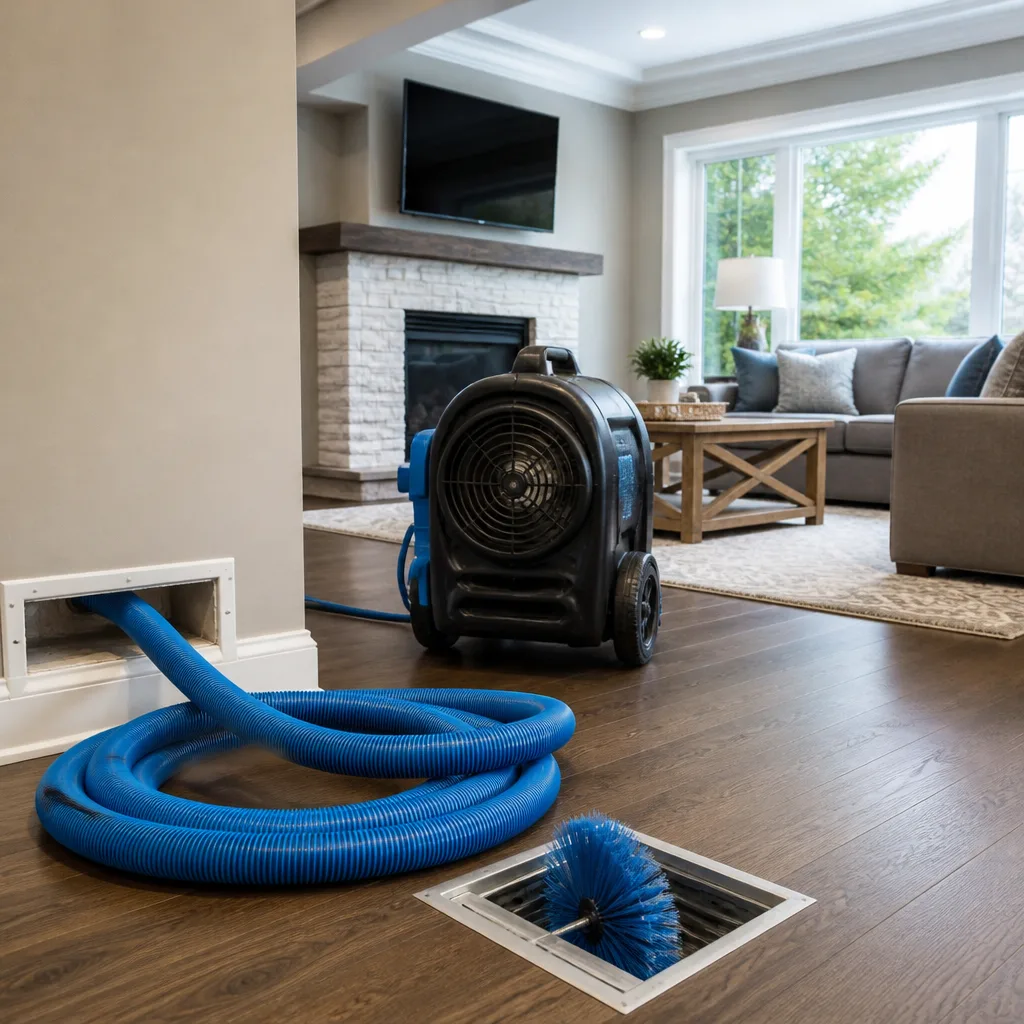 Whole-home duct cleaning
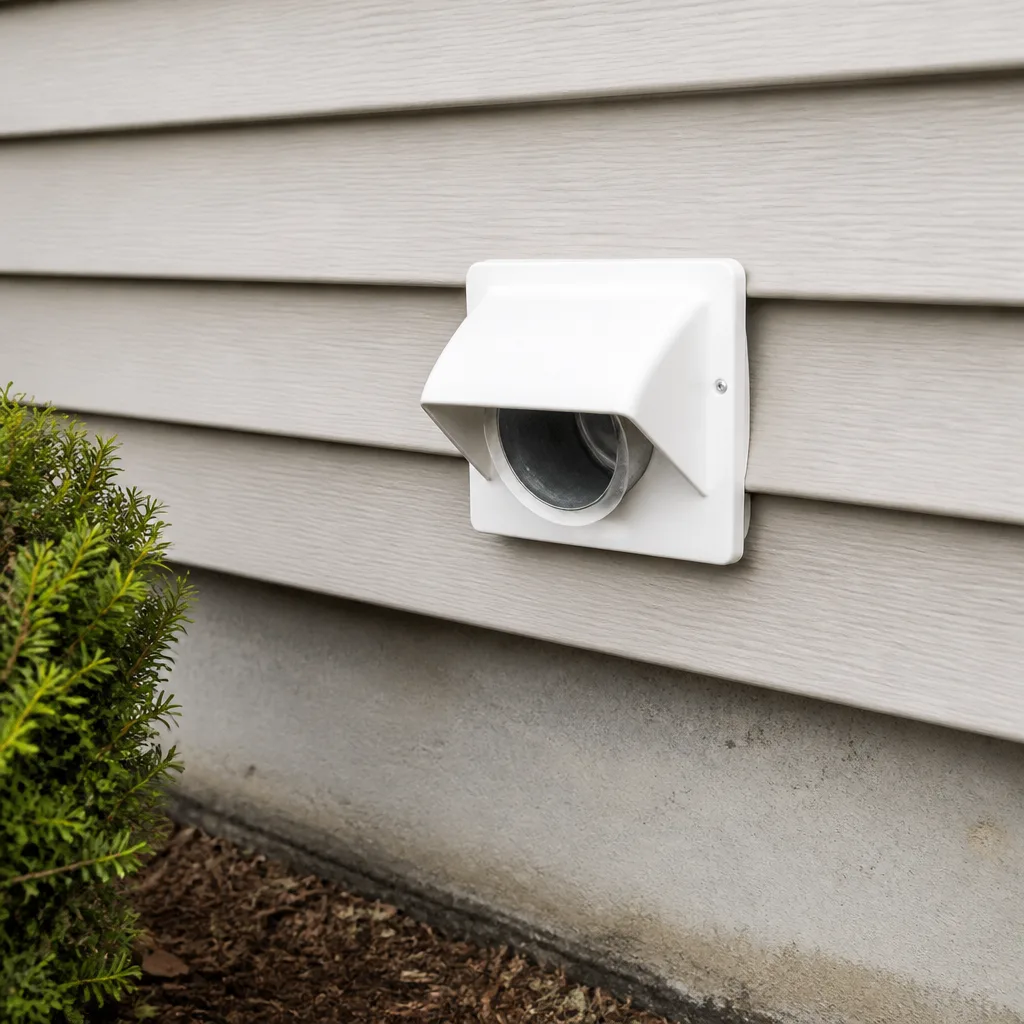 Dryer vent cleaning
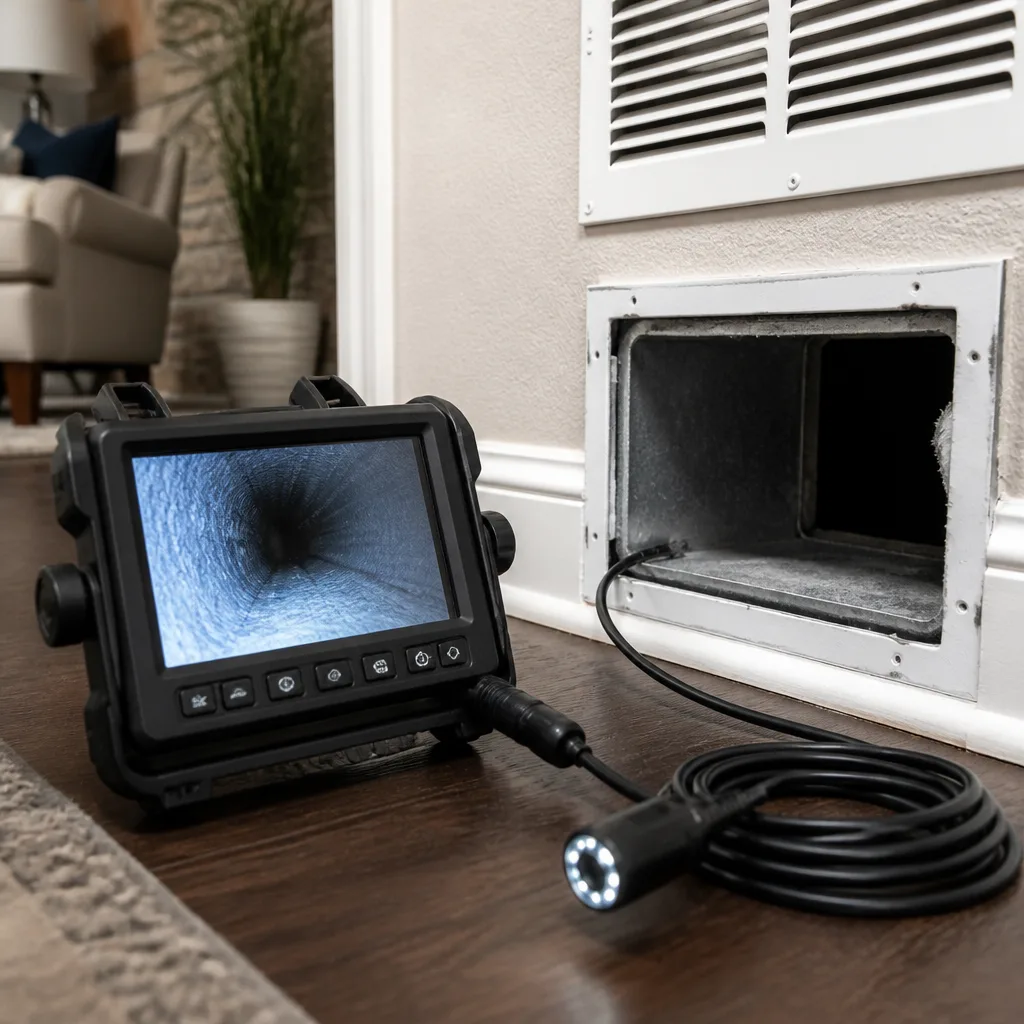 Camera inspection
 Sanitizing & deodorizing
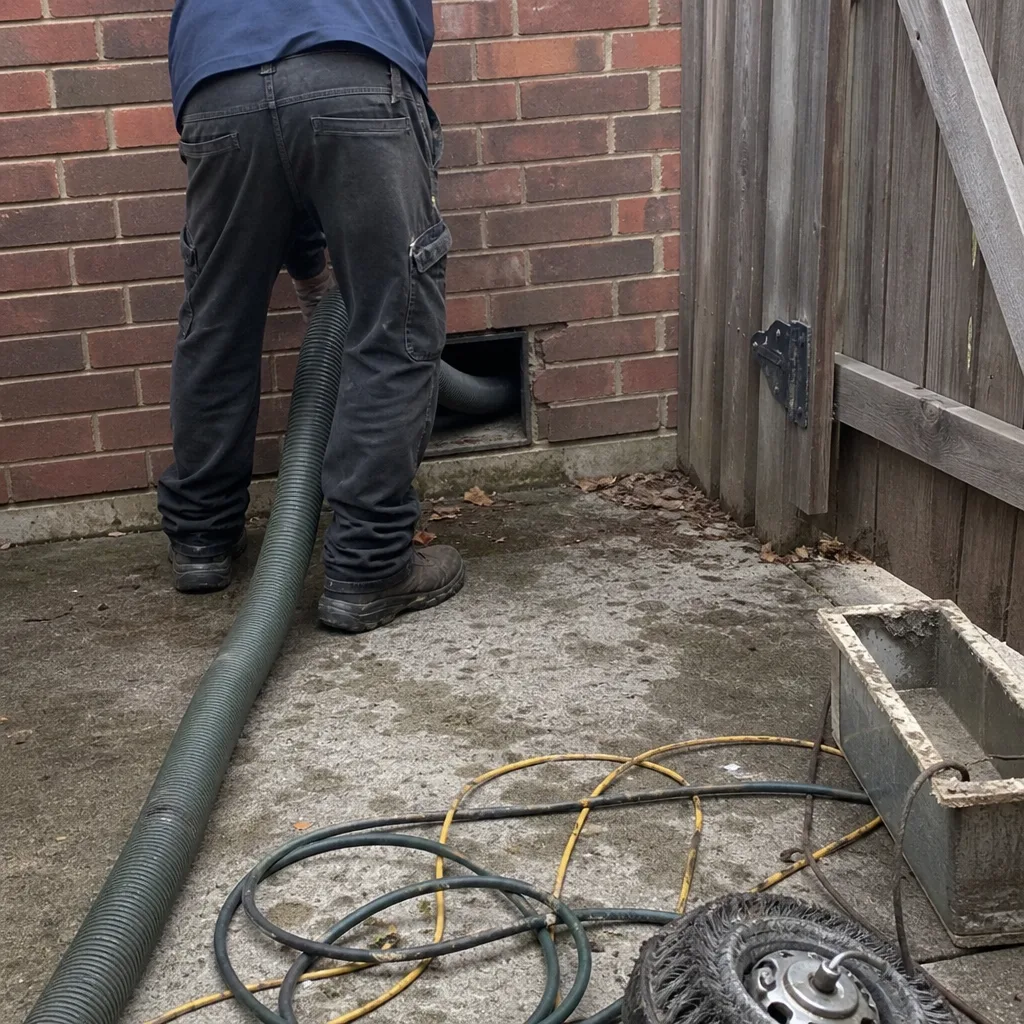
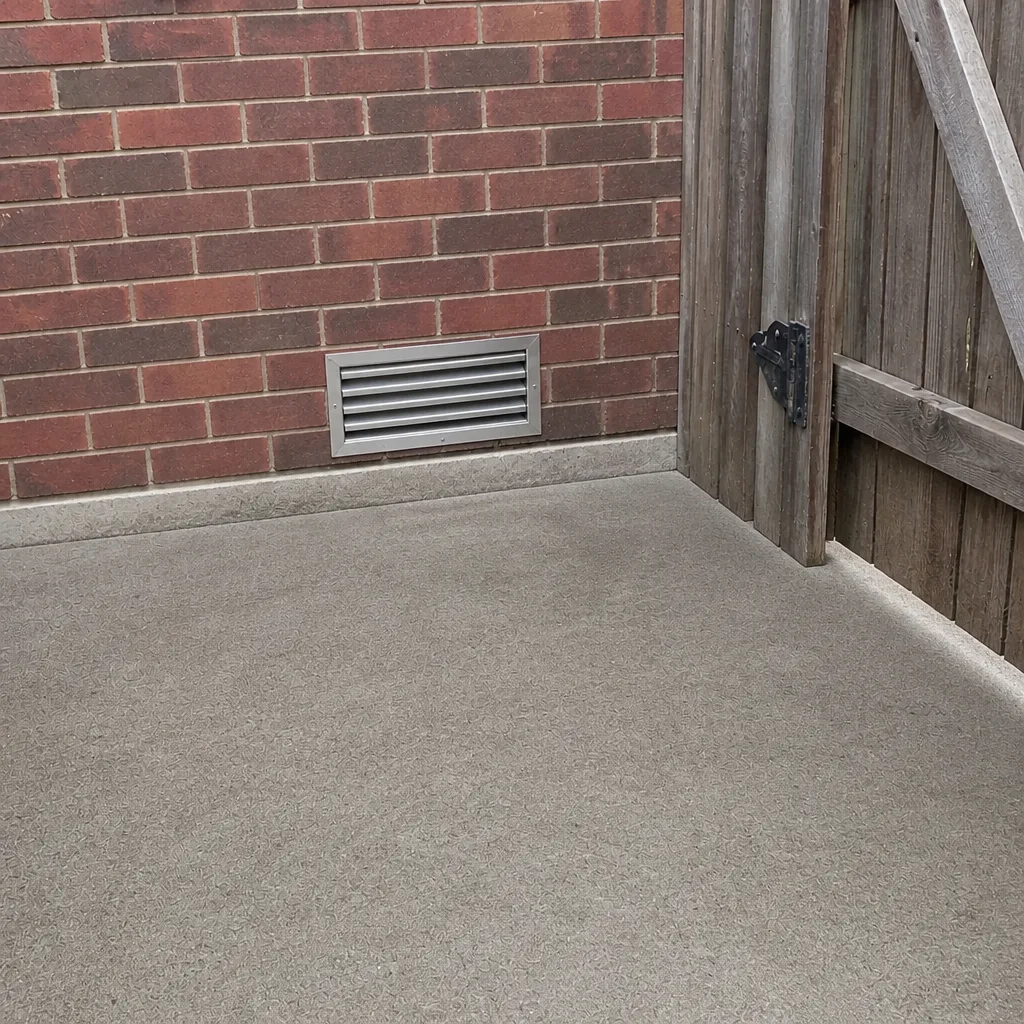
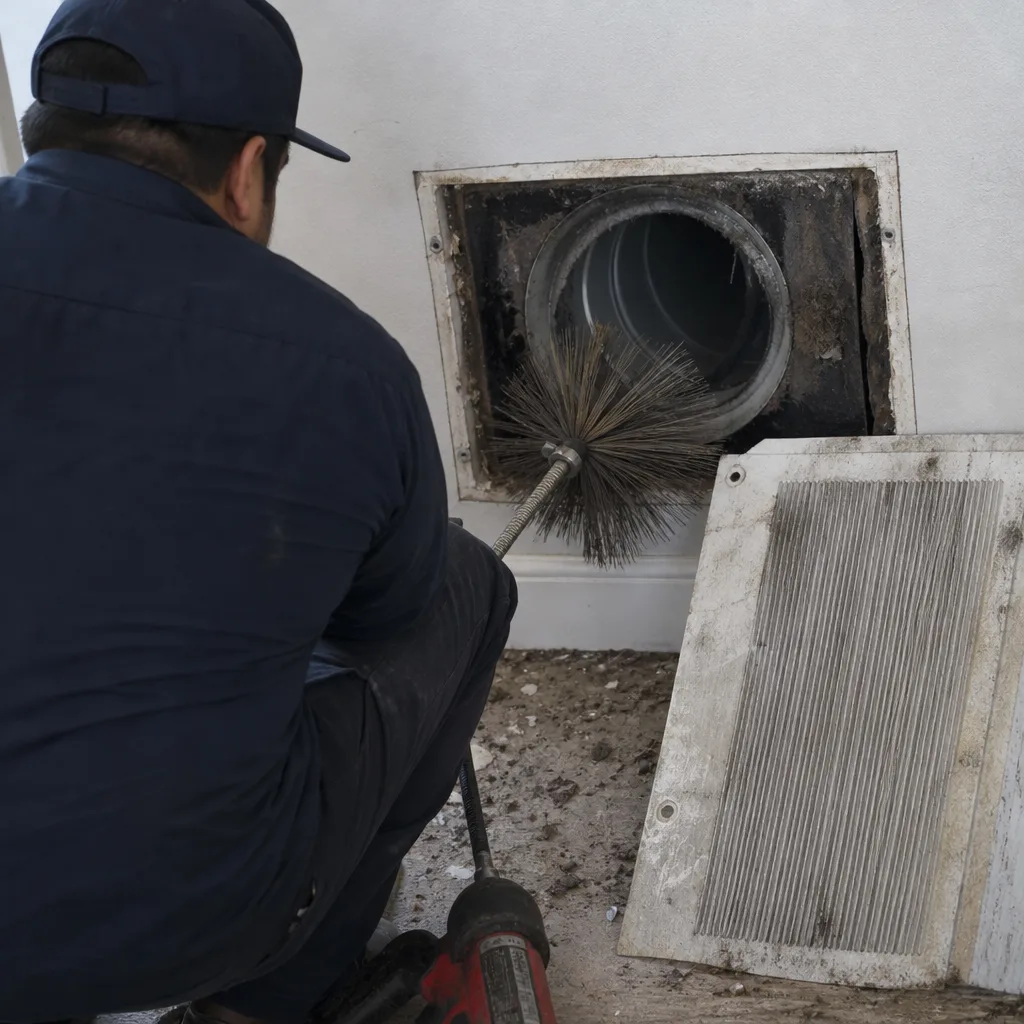
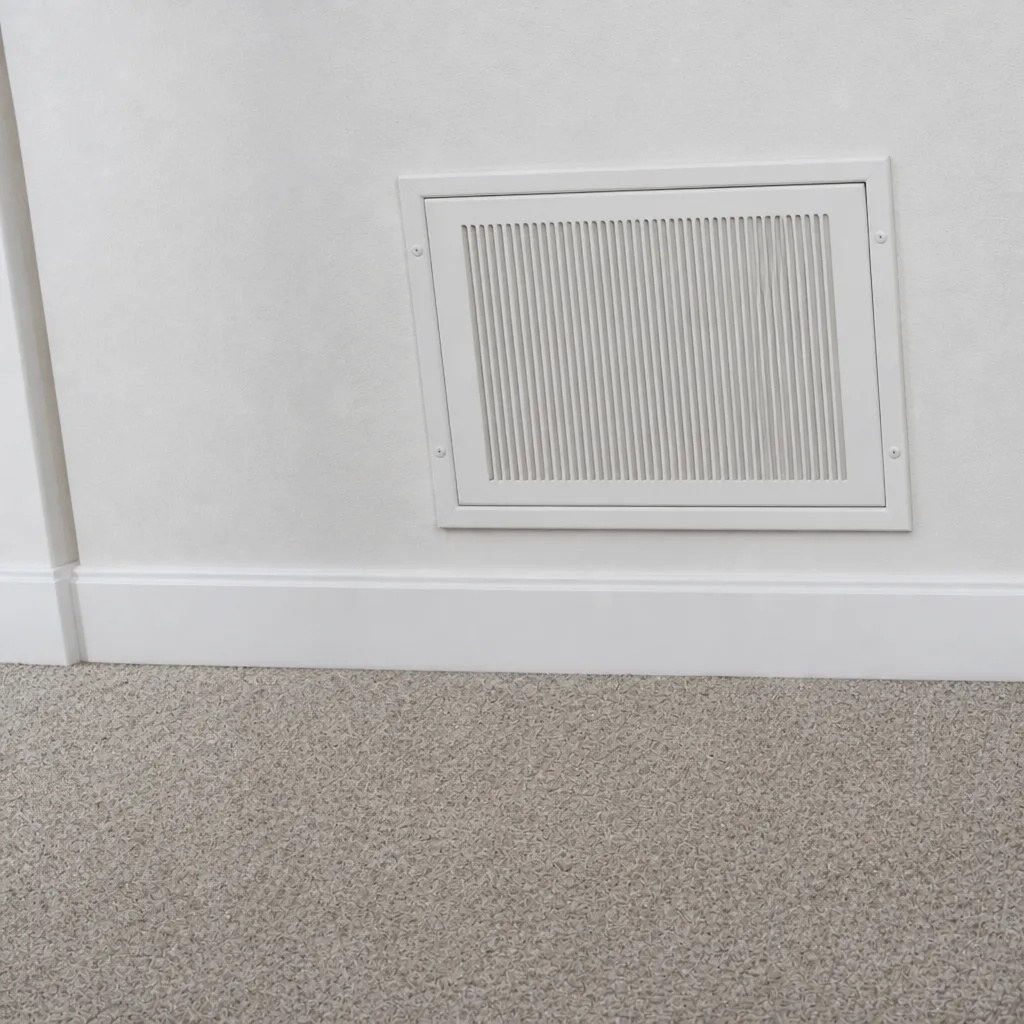
Whole-system duct and dryer vent check with before-and-after photos - you see exactly what came out of your vents
That "$99 whole-house special" is a bait ad - the real number appears once they are in your hallway, or the "clean" is a shop-vac at the register. We photograph the inside of your ducts before and after instead.
Air Duct Cleaning Emergency Preparedness Guide for Richardson Homes
Most homeowners think about duct cleaning as maintenance, something to schedule when the vents look dusty. That’s the wrong frame. Your duct system is a distribution network, and after water, smoke, or soot gets inside it, every time the system runs it pushes contamination into every room. Richardson homes face a specific set of risks: tornado alley storm systems, flooding events, kitchen fires, and HVAC condensate failures that can quietly soak a duct run for days. This guide covers what to do in the first 24 hours, when to shut the system down, how to document contamination for an insurance claim, and why standard cleaning isn’t enough after a real event.
Quick Answer
After a flood, fire, or major storm intrusion in a Richardson home, turn the HVAC system off until the ductwork has been inspected and dried, then cleaned with professional equipment. Standard vacuuming doesn’t address the problem. Moisture inside ducts within 24 to 48 hours can support mold growth, and smoke residue keeps smelling until it’s physically extracted from the duct surfaces. Call (877) 741-8677 for a free estimate. We answer 24/7. Fast dispatch from 7am to 7pm, Sunday through Friday.
Styles & brands we work with
- Whole-home duct cleaning
- Dryer vent cleaning
- Camera inspection
- Sanitizing & deodorizing
Table of Contents
- Why Richardson Duct Systems Are Vulnerable After a Major Event
- Post-Flood Duct Protocol: What the First 24 to 48 Hours Do
- Smoke and Soot Contamination: Why Odor Masking Fails
- The HVAC Shutdown Decision: When to Run the System and When to Leave It Off
- Documenting Duct Contamination for a Texas Insurance Claim
- Negative Air Pressure and Containment During Post-Event Cleaning
- Your Pre-Emergency Duct Preparedness Checklist
- When Cleaning Isn’t Enough: Duct Repair After Storm Damage
Why Richardson Duct Systems Are Vulnerable After a Major Event
A duct system is a sealed loop that runs through attics, walls, crawlspaces, and sometimes under slabs. That loop is connected to every room in the house through supply registers and return grilles. When water, smoke, or debris enters any part of it, the HVAC fan becomes a contamination delivery mechanism.
Richardson sits in tornado alley, which means high-wind events, hail, and heavy rain-driven infiltration happen here. A common scenario we prepare homeowners for: wind-driven rain finds a gap at a roof jack or a failing attic duct connection, and water enters the duct run without ever appearing on a ceiling inside the living space. The homeowner notices a musty smell weeks later and assumes it’s the carpet. It’s often the attic ductwork that’s been wet for days.
Flooding is the other pathway. When standing water reaches the foundation or enters a crawlspace, ducts that run low or rest near the ground become moisture reservoirs. Richardson has seen significant flooding events, and post-flood duct contamination is one of the most common indoor air quality problems we’re asked about. The contamination isn’t just water. It’s silt, organic material, and whatever the water carried in.
Fire and smoke add a different kind of damage. A kitchen fire or even a minor smoke event deposits fine residue on every interior duct surface. That residue isn’t visible unless the duct is opened. But the nose knows: every time the fan runs, occupants smell it. That smell doesn’t fade because the smoke is baked into the galvanized metal and flex duct material.
The pattern is consistent. A Richardson homeowner or property manager deals with the immediate event, gets the water out, replaces the drywall, and then deals with unexplained odors, allergy flare-ups, or uneven airflow for months afterward. The duct system is the piece that gets missed.
Post-Flood Duct Protocol: What the First 24 to 48 Hours Do
Water inside a duct system starts changing the environment fast. Within 24 hours, residual moisture on duct walls and insulation supports microbial growth. By 48 hours, that growth can be established on metal, on the inside of flex duct, and on the fibrous liner some duct systems use for sound baffling.
Standard cleaning is not sufficient after a flood event. A rotary brush running through a duct will scrub loose material, but if the contamination is biological, it needs to be physically removed with HEPA-rated capture, not just loosened. That’s why the equipment matters. A shop vacuum removes dust. A professional HEPA system with negative air pressure holds particles while they’re being removed.
Here’s the protocol we’d lay out for a Richardson home after standing water reached the duct system or its surrounding space:
- Stop running the system immediately. A wet system with the fan on pulls moisture into spaces that would otherwise stay dry and spreads spores through the whole house.
- Document conditions before cleanup begins. Photograph water lines, damaged duct connections, and any visible debris. This preserves the evidence your insurer needs.
- Dry the surrounding space first. Duct cleaning before the attic or crawlspace is dry just re-wets the system.
- Inspect every duct run, not just the visible ones. A camera inspection of the trunk line and branch runs catches water that settled at low points.
- Clean with HEPA-rated equipment under containment. This is where a Nikro HEPA-rated vacuum and rotary brush system matter, because the capture has to be verified, not assumed.
- Verify the system is dry before restarting. Running a wet system undoes the entire job.
- Schedule a follow-up after the season. Post-flood duct problems often surface again after a heating or cooling cycle pushes through the whole system.
For more detail on how a full-system clean works under normal conditions, our air duct cleaning page covers the process walk-through. After a flood, though, the protocol is different: the emphasis shifts to moisture control, biological removal, and containment.
Smoke and Soot Contamination: Why Odor Masking Fails
Smoke residue isn’t just a smell. It’s a chemical layer on the metal surfaces inside your ducts. That layer consists of carbon particles, soot, and the hydrocarbons that come with partial combustion, and it attaches to the interior of the ductwork the same way it attaches to walls after a fire. Every air pass brings it back into the living space for months.
Odor-masking treatments fail for one reason: they don’t remove the contamination, they cover it. A fogger or a scented product will make the first few days after the treatment smell clean. But the source layer is still on the duct walls, and as soon as the HVAC system cycles through a season of warm air, the smell comes back. In our experience, homeowners who’ve already paid for odor treatments end up paying again for real extraction because the masking failed.
What actually works is extraction-based cleaning:
- Rotary brush agitation breaks the residue layer off the duct interior walls. Stubborn soot doesn’t come off with vacuum alone; the walls have to be mechanically scrubbed.
- HEPA-rated vacuum capture pulls the loosened residue into a filtration system rated for fine particulate. This is where a Nikro HEPA-rated vacuum is doing the real work.
- Containment keeps released particles out of the living space while the cleaning is happening.
- Post-clean verification confirms the duct surfaces are clear and the odor source is gone.
Richardson kitchens aren’t the only source. Smoke events can come from a nearby fire, from a chimney issue, or from a duct system that pulled air from an attached garage or equipment room after a small fire. If the unit pulls return air through a contaminated path, the whole system needs cleaning, not just the immediate returns.
For the drying side of the equation after a fire suppression or a water event, we also handle dryer vent cleaning as a separate fire-safety service. Dryer vents accumulate lint and can contribute their own fire risk if they’ve never been cleaned, and a post-fire safety review should include them.
The HVAC Shutdown Decision: When to Run the System and When to Leave It Off
Run the system or leave it off? The answer depends on what happened. Here’s a simple decision path.
Leave the system off if:
- Standing water reached the duct system, the attic around it, or the crawlspace
- Smoke or soot entered the return air stream
- You can smell mustiness or smoke through supply registers
- You see water inside any visible duct or duct connection
Run the system only after a quick check if:
- The water event was in a different part of the house and didn’t reach any duct run
- The smoke event was contained to a single room and the supply/return registers in that room were closed
- An HVAC professional or duct specialist has confirmed the system is dry and didn’t take on debris
Never run the system if:
- The HVAC unit itself took on water. Water in the air handler, blower, or electrical components is unsafe to energize. That’s an electrical hazard, and the unit needs to be inspected before anyone powers it back on.
- You can see mold on any duct surface
- There’s an active condensate leak or a wet evaporator coil inside the air handler
The most common mistake we see in Richardson after a storm event: someone turns the system back on to “dry things out.” On a wet duct system, running the fan doesn’t dry anything. It moves moisture into the airstream and distributes it through the house. That’s exactly what you’re trying to avoid.
Weather is another Richardson-specific factor. The mild winters here mean that the heating system may not cycle regularly for weeks during a stormy fall or winter season. This is why moisture problems in ducts don’t always present themselves immediately. A duct run can stay wet without the fan pushing air through it because the system hasn’t been called to run. When it finally does run, the smell or the condensation issue arrives out of nowhere. If there’s a compressor or blower call during a mild stretch, that’s the moment the problem surfaces.
Documenting Duct Contamination for a Texas Insurance Claim
Duct contamination is often excluded from a standard homeowner’s policy or handled as part of a larger water or fire claim, so documentation matters from the first hour. What insurers want is proof: when it happened, what caused it, what was damaged, and what the remediation requires.
Here’s the documentation protocol we recommend to every Richardson homeowner and property manager we work with:
- Photograph the source event. Water lines on drywall, the flooded area, the fire damage, the wet ceiling. Date stamp the images if the camera doesn’t.
- Photograph the duct system before cleaning. Open one or two registers and take photos of the visible duct interior if you can see it. Don’t clean anything first. Cleaned ducts are harder to verify as damaged.
- Get the inspection in writing. An inspection report noting moisture present in the duct system, visible debris, or visible contamination is the linchpin of most claims. Verbal “yeah, it’s wet” doesn’t stand up in an adjuster’s review.
- Keep the HVAC shutdown documented. A note or invoice showing when the system was shut down and why supports the claim that the damage was mitigated promptly.
- Keep the cleaning invoice alongside the inspection. Insurers want to see both the diagnosis and the remedy.
- Ask your adjuster what format they need. Texas policies vary. Some adjusters want a narrative report; some want photos with specific labeling. Ask before the remediation, not after.
For property managers coordinating across multiple units in Richardson, having a single cleaning service that can document each unit consistently helps. We can work with your insurer on the documentation side, though the coverage decision itself is between you and your carrier. The team at Richardson has walked through this protocol with plenty of local homeowners, and the ones who took photos before cleanup get faster claims.
Negative Air Pressure and Containment During Post-Event Cleaning
When a duct system has been contaminated by a flood or a fire, cleaning it without containment doesn’t make sense. Agitation loosens particles into the air, and without an active particulate capture system, those particles resettle into the living space. That’s why we build the cleaning around a negative air pressure setup with filtration equipment rather than a single vacuum hose.
The Abatement Technologies air filtration equipment we deploy on post-event jobs is designed for professional mold and contaminant remediation, not for routine vacuuming. During an active cleaning, the filtration unit draws air through a rated filter while the duct runs are being agitated, keeping fine particulate out of the rooms where people are living. It’s a containment strategy, not a marketing label. The point is that the particles captured during cleaning actually leave the house rather than relanding on the furniture.
The same principle applies to the humidity control side of the job. In Richardson’s mild winters, a post-flood cleaning scheduled quickly after the event benefits from the low ambient humidity; a cleaning scheduled months later is dealing with a duct system that’s been cycling through warm-season condensation conditions. Either way, the containment strategy is what makes the difference between a temporary improvement and a lasting fix.
For Honeywell and Aprilaire whole-home air quality products, we can also plan a filtration upgrade alongside the cleaning so that a post-event system comes back online with a higher standard. If the ducts have just been contaminated, adding a better filter after the cleaning is a sensible sequence. Doing it before the cleaning is a waste of a filter.
Your Pre-Emergency Duct Preparedness Checklist
Emergency preparedness isn’t about predicting the emergency. It’s about having the steps ready so you’re not trying to figure out your HVAC system at 2am with water coming through a ceiling. Here’s the checklist we recommend every Richardson homeowner keep somewhere easy to find.
- Know where your HVAC shutoff is. The breaker for the air handler, and the gas or electric supply to the unit. You shouldn’t be hunting for the panel during a water event.
- Photograph your duct system today. Every visible duct run, register, and air handler location, stored in a folder on your phone. This is the “before” reference for any future claim.
- Know your system’s age and filter size. Both are written on a sheet you can then hand to an inspector if you need one quickly.
- Keep a register diagram. A simple hand-drawn map of which registers feed which rooms helps a duct specialist evaluate contamination distribution after an event.
- Know your water shutoff and the route to your HVAC air handler. If a condensate line fails, you want to stop the water before dealing with the duct.
- Have the number saved. Call (877) 741-8677. We answer 24/7. Fast dispatch from 7am to 7pm, Sunday through Friday.
- Schedule a pre-season duct inspection. A duct system that’s clean before a storm is a duct system that can be quickly cleared after one.
None of this takes more than an hour to set up. The Richardson homeowners who do it save themselves the worst hours of the recovery process, and the property managers who do it shave days off a building-wide remediation.
When Cleaning Isn’t Enough: Duct Repair After Storm Damage
Some storm and flood events don’t just contaminate the ducts. They damage them. Wind events can dislodge attic duct connections. Water can degrade the sealant at joints. A fallen limb hitting a roof can compress or tear a duct run. In those cases, cleaning alone leaves the system vulnerable to re-contamination, because the leak is still there.
That’s why we offer air duct repair as a standalone service rather than treating it as part of a cleaning only. We can patch, reseal, and restore duct integrity after a cleaning, and we do that work in-house rather than subcontracting it. When a duct run is reconnected and sealed properly, the next contamination source doesn’t have an open door.
For the Richardson area specifically, this matters after hail and wind events because damage often happens in the attic run where the ducts pass near exposed roof decking. An inspection after a serious storm should include checking every accessible duct connection, not just the visible ones at floor registers.
Common Mistakes to Avoid
- Running the system to “air it out” after a water event. That’s the single most damaging move you can make. A wet duct system running the fan distributes moisture and any biological growth through the entire house, and it turns a targeted cleaning job into a whole-system remediation.
- Hiring the cheapest clean after a flood. Post-event cleaning isn’t the same as routine cleaning. A truck-mounted hose with a shop vac setup can’t do containment, and without HEPA-rated capture you’re paying to loosen material, not remove it. Richardson rebuilds after a flood are expensive; a cheap duct cleaning that misses the biological contamination is the more expensive mistake.
- Cleaning before the space is dry. Duct cleaning on a wet attic or crawlspace re-introduces moisture. Sequence matters: dry the structure, then clean the ducts.
- Masking odor instead of removing the source. Foggers, ozone machines, and scented treatments don’t remove soot or biological residue from duct surfaces. They postpone the problem. For homeowners dealing with a persistent smoke smell after a kitchen fire, this is the most common detour we see.
- Skipping documentation until after cleanup. Once the ducts are clean and the attic is dried, you can’t easily prove the damage was there. Photograph before you clean, and get the inspection in writing.
- Assuming a broken duct reseals itself. A disconnected attic duct won’t heal, and it won’t be visible from a register. Only a duct repair during or right after the cleaning closes the gap.
- Waiting until the smell is strong. Moisture damage in Richardson’s mild climate doesn’t always announce itself. By the time an odor is obvious, the duct system has usually been contaminated for weeks.
See the difference
 Before
 After
 Before
 After
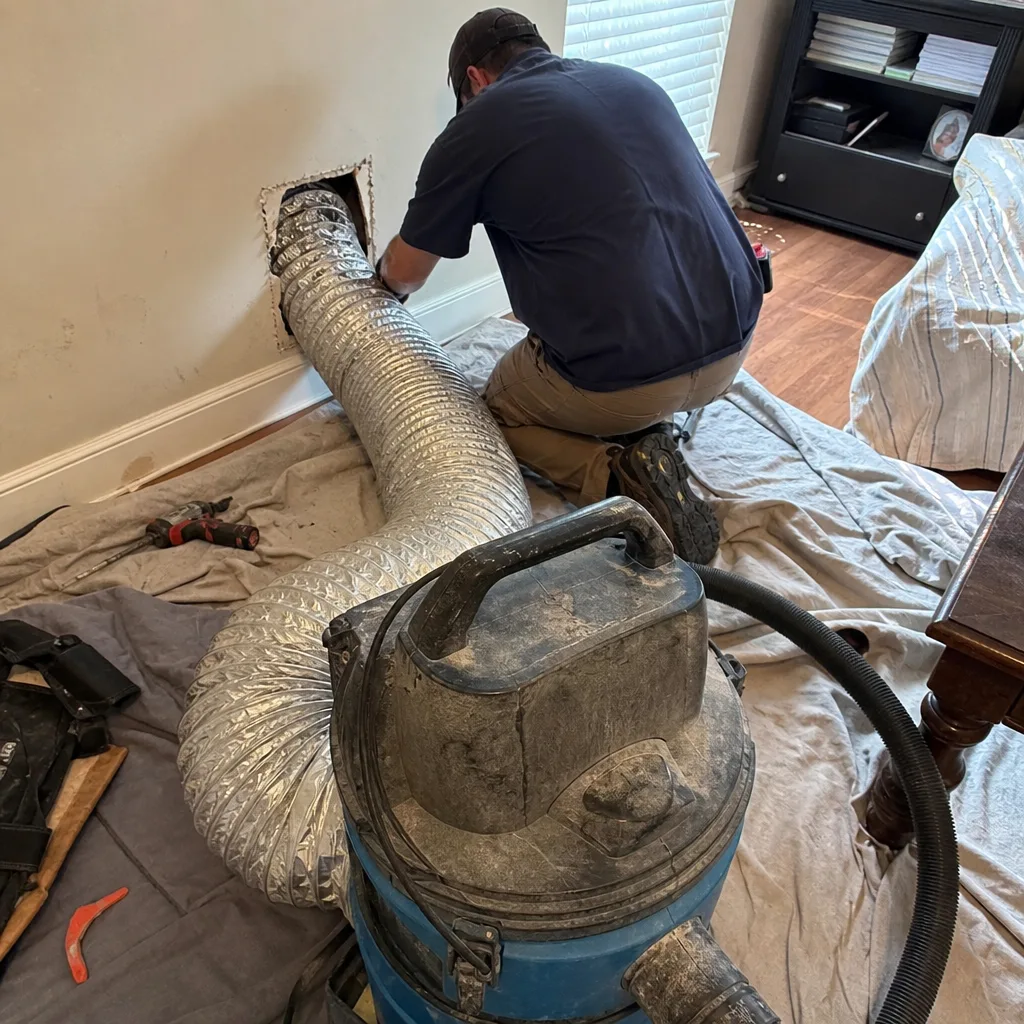 Before
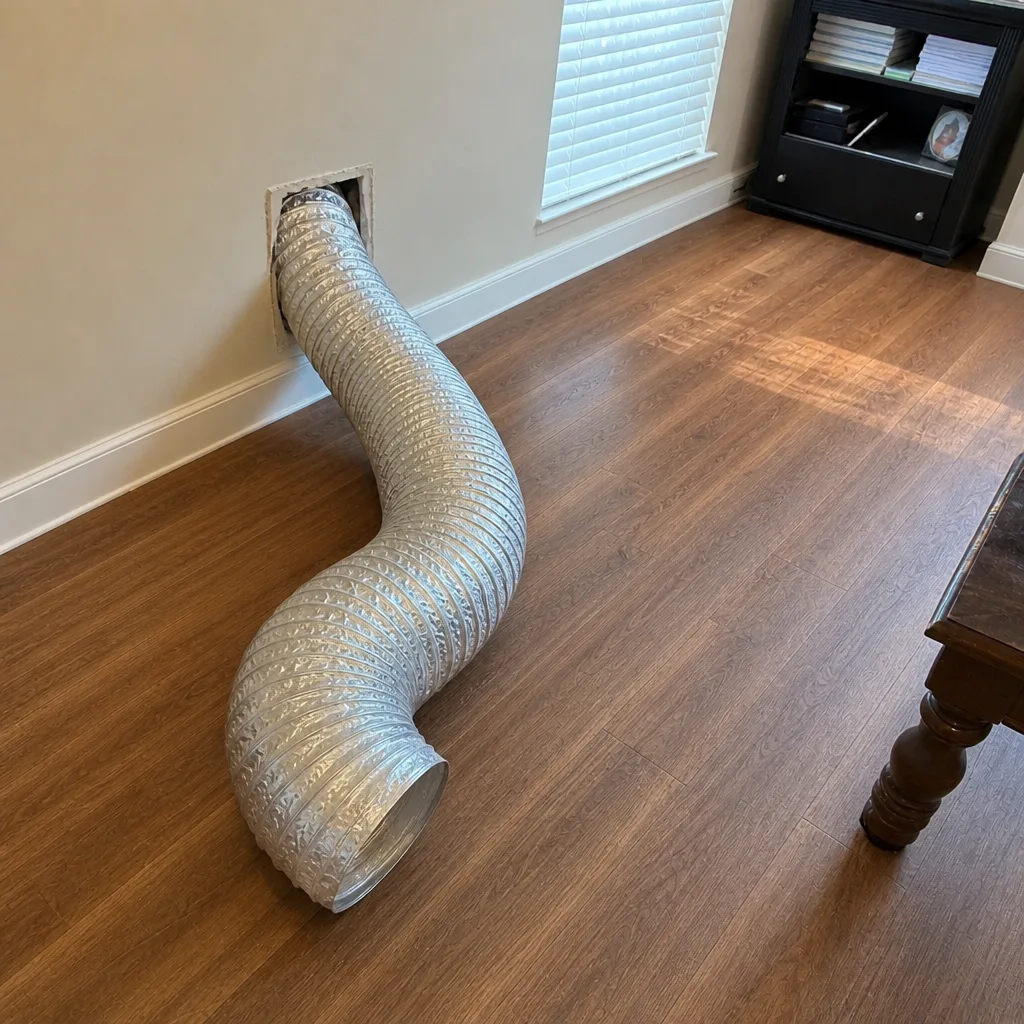 After
When to Call a Professional
Call us after any event where water, smoke, or soot reached the duct system, and if the HVAC system itself took on water, call before anyone powers it back on. If you’re seeing condensation on registers, smelling something musty at the supply vents, or noticing allergy symptoms that flare up when the system runs, that’s a duct inspection trigger, not a filter change. Property managers should call after any tenant-reported event involving water, smoke, or HVAC failure before a clean-up is scheduled, so the duct system is part of the plan.
Duct Cleaning Richardson offers free estimates in Richardson – call (877) 741-8677. We answer 24/7. Fast dispatch from 7am to 7pm, Sunday through Friday.
Frequently Asked Questions
For a typical Richardson home, whole-system air duct cleaning usually falls in the range of $300 to $700, depending on the number of registers, whether the system has multiple zones, and whether post-event containment is needed. Post-flood or post-fire cleanings are typically higher because they require HEPA-rated capture, containment, and often a follow-up inspection. We don’t quote per-vent prices or a teaser coupon figure, because that’s how the industry’s bait-and-switch reputation started. You’ll get one flat price per system, agreed in writing before any work begins, and the written estimate sets the final price. Call (877) 741-8677 for an exact quote – estimates are free.
A cheaper quote usually means less equipment, less containment, and less time on the job. A basic shop vacuum and a hose can run through a duct system quickly; a HEPA-rated system with negative air pressure takes longer and costs more to run. After a flood or fire event, that delta is the difference between removing the contamination and just moving it around. When comparing quotes, ask what filtration equipment will be used, whether containment is part of the job, and whether the price covers the whole system or just the main runs. Call (877) 741-8677 if you want a free estimate to compare against what you’ve been quoted.
Ask for before-and-after photos of your own duct surfaces, and ask for them before the work starts so the “before” images are captured properly. Any professional service should be willing to show you the actual duct interior, not a stock photo. We use a Rotobrush rotary-brush system and Nikro HEPA-rated vacuum equipment on post-event jobs, and the before-and-after images from those runs are what we share. The written inspection and cleaning report should arrive with the invoice. Call (877) 741-8677 for a free estimate and to see what the process covers for your home.
Under normal conditions, most homes benefit from cleaning every three to five years, though that depends on pets, allergies, renovation work, and whether the system has had any water intrusion. After a flood, fire, or smoke event, the answer is immediate, not scheduled: clean as soon as the structure is dry. A Richardson home that had to shut down the HVAC system during a flood event should treat the duct cleaning as part of the remediation, not a maintenance item for later. Call (877) 741-8677 for a free estimate if you’re not sure where your system stands.
It can, if the smell is coming from contamination in the duct system that gets physically removed. Smoke and soot residue on duct surfaces keeps gassing off every time the system cycles, and an extraction-based cleaning removes that residue. If the smell is coming from something else, like wet carpet or a contaminated air handler, duct cleaning won’t fix it, and the inspection should catch that before anyone commits to the job. The purpose of the inspection is to find where the odor source actually is. Call (877) 741-8677 to book a free estimate in Richardson.
Then the job needs to include duct repair, not just cleaning. A disconnected or crushed duct run leaves the system open to re-contamination, and cleaning alone leaves that opening in place. We can clean the system and repair the damaged section in the same visit, because air duct repair is a service we handle in-house rather than subcontracting it out. That’s part of what makes the Richardson post-event response work: one job, one crew, both halves of the fix. Call (877) 741-8677. We answer 24/7. Fast dispatch from 7am to 7pm, Sunday through Friday.
The Bottom Line
The duct system is the part of the house that’s easiest to forget after an emergency, and it’s the part that keeps distributing the problem until it’s addressed. For Richardson homeowners, the protocol is straightforward: stop the HVAC system when water or smoke has entered the ducts, document the event before cleanup, dry the surrounding structure, then clean with HEPA-rated equipment under containment. If the ductwork itself is damaged, add repair to the job. If you’ve had a flood, fire, or serious storm event, don’t wait for the smell to become the proof. Call (877) 741-8677 for a free estimate. We answer 24/7. Fast dispatch from 7am to 7pm, Sunday through Friday. Our technicians have up to 15 years of experience, and the estimate is free. For more on routine cleaning and scheduled service on our main Duct Cleaning Richardson page.
Written by the team at Duct Cleaning Richardson.